
Over the past year, my illustration method has shifted. With each animal portrait in my 100 drawings in 100 days series, my brushstrokes grew more confident and my planning became clearer. My oil pastel Pokemon art I worked on earlier on colored and toned paper was the flame that lit the match:
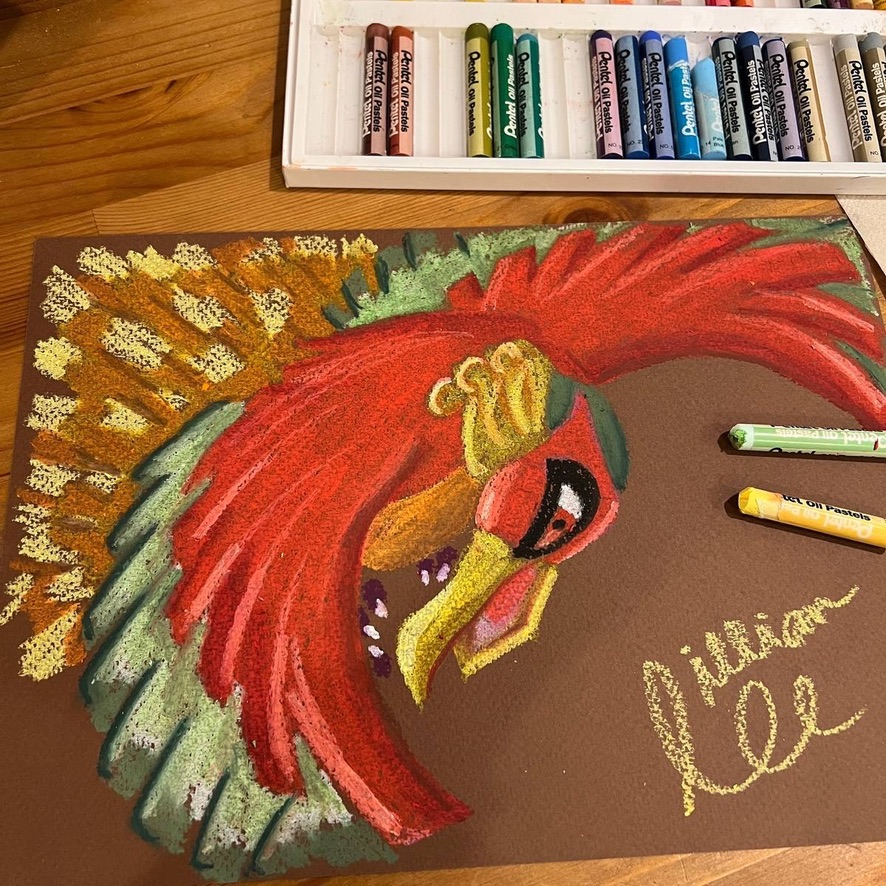
Those studies taught me how to think about color relationships and, just as importantly, what details deserve my attention and which ones can quietly fade into the background.
I used to start on a white page with very little sense of how the colors would interact. Now, I begin with a background color and sketch in white. That single choice changes everything. The background gives me a direction — a kind of north star — so I already have an idea of which colors I want to emphasize in my subject before I even begin.
Another big shift has been letting go of my obsession with the final outcome. Before, I’d get stuck trying to leap straight from point A to point C, skipping the messy middle entirely. But you can’t skip point B. For me, point B is understanding where the subject lives on the page without overworking the details too soon. Once that’s in place, I choose one or two areas to really focus on, and let everything else support them. When I’m drawing fish, for example, I almost always start with the eyes and lips. Everything else comes second.
Lately, I’m simply enjoying the process more — watching a drawing begin as a shapeless blob and slowly revealing itself as I plug away. It feels less frustrating, more playful, and more satisfying.
Leave a Reply